
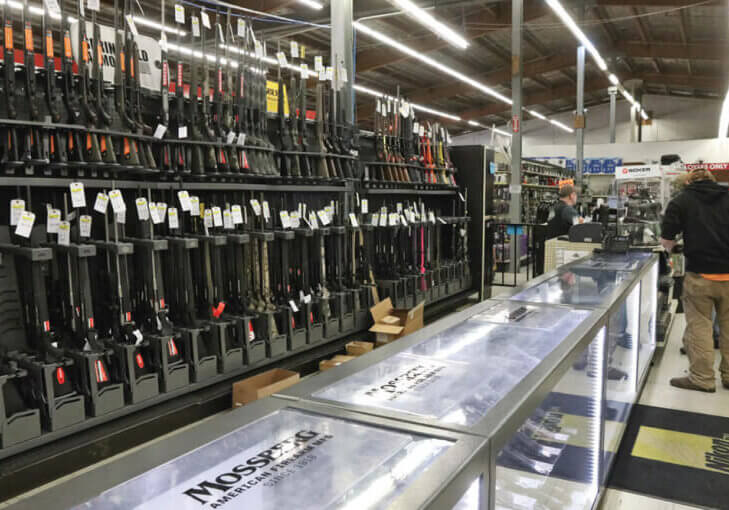
Jake had been running his gun shop for eight months when the notice arrived: a state compliance inspection was coming.
He wasn’t worried. His bound book was clean, his 4473s were in order, and he ran background checks by the book. He figured the inspection would be a formality.
It wasn’t.
What the Inspector Found
The inspector’s concerns weren’t about Jake’s paperwork. They were about his displays.
His cable-through-trigger-guard system didn’t meet the state’s standard for adequate physical security, particularly given his street-front location. A physical inventory count turned up three discrepancies, not missing guns, just rifles that were hard to locate among his crowded, overlapping racks. And the inspector noted that his setup made it difficult for staff to maintain control of multiple firearms during busy periods.
Jake wasn’t cited, but he left the warning conference with 30 days to make documented corrections. It was a wake-up call he hadn’t expected.
The Hidden Cost of “Good Enough”
After the inspection, Jake did something he should have done sooner. He added up what his current system was actually costing him.
His store policy required staff to move all long guns into the vault each night, a 45-minute process with two employees. That came to roughly 547 hours per year. At $15 per hour, he was spending $8,213 annually just moving inventory back and forth. Every transfer was also a handling risk. Scratches, dings, and stock damage from repeatedly moving rifles in and out of a vault added up in ways that didn’t show up on a single line item but quietly ate into margins.
During peak hours, one employee had to stay near the open display area at all times. That meant customers waiting, and some of them leaving. Jake estimated he was losing two to three sales per week to that bottleneck alone.
When he totaled it up, the “affordable” display system he’d started with was costing him more than $16,000 a year in labor and lost revenue. The compliance liability wasn’t even part of that number.
Making the Change
Jake invested in Gun Warden’s locking display systems. Horizontal Locking Arms for his long guns, Pistol Wardens for handguns, and a Security Showcase for accessories and higher-value pistols. The upfront cost was significant, but the math wasn’t complicated:
- Annual labor savings: $8,213
- Recovered sales (conservative): $7,800
- Insurance premium reduction: $1,200
- Inventory damage reduction: $800
Simple payback: under two years.
What the spreadsheet didn’t capture was the change on the sales floor. With Horizontal Locking Arms, customers could see the full profile of every rifle, read price tags clearly, and get close to inventory without anything in the way. When someone wanted to handle a firearm, one key gave staff access immediately. No hunting through a drawer of case keys. No pulling rifles out of a crowded vault. The experience was cleaner for the customer and faster for the staff.
The Pistol Warden did the same for handguns. Instead of lifting lids on cases and passing pistols back and forth over a glass counter, customers could see exactly what they were considering before they ever asked to hold one.
What Happened Next
Fourteen months later, the state returned for a follow-up visit. The inspector noted the upgraded security immediately. The inventory count was clean. No discrepancies, no concerns. The inspector called Jake’s security measures exemplary.
Jake also noticed something he hadn’t expected: customers started commenting on how professional and organized the store felt. A local shooting club began recommending his shop by name. Within six months, monthly revenue was up 18%.
Not all of that came from the displays. But Jake is certain they played a significant role.
The Lesson
Jake’s takeaway is straightforward: compliance and business performance aren’t separate problems. A display system that creates liability is also one that costs you labor, limits your staff, damages your inventory, and signals to customers that you’re operating at the minimum. One that exceeds security standards does the opposite on all counts.
If your current setup was chosen because it was the affordable option at the time, it might be worth doing the same math Jake did.
Curious what the numbers look like for your store? Reach out to Quality Wood & Metal Designs at info@qualitywooddesigns.com.